
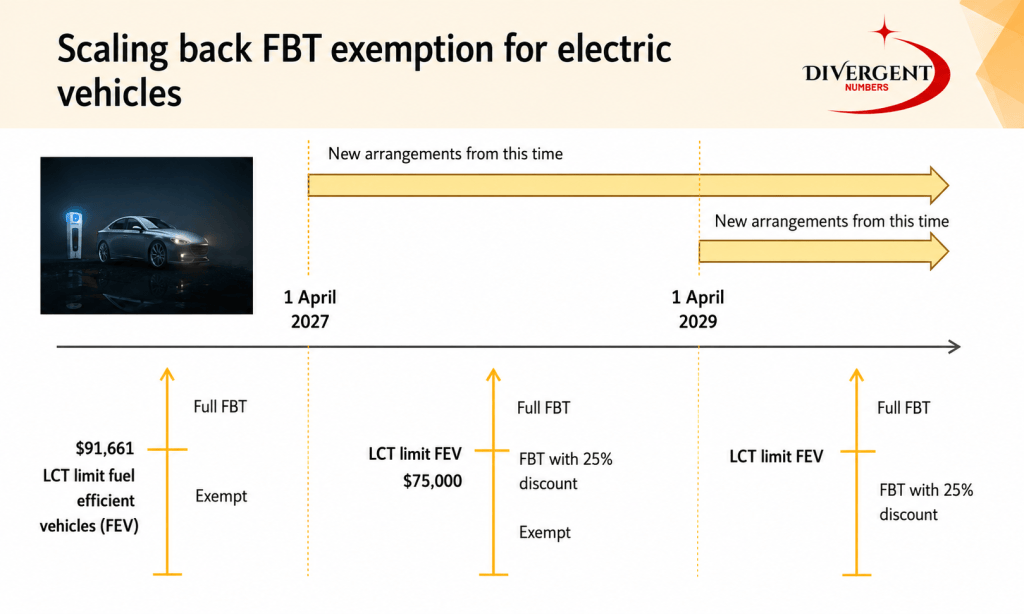
Australia’s fringe benefits tax concession for electric vehicles is set to change, with the full exemption to be progressively reduced from 1 April 2027.
The Australian Government announced the changes as part of the 2026–27 Federal Budget. While eligible electric vehicles will continue to receive concessional FBT treatment, the level of support will increasingly depend on the vehicle’s value and when the arrangement begins.
What is changing?
The proposed changes will be introduced in three phases.
Until 31 March 2027
The existing full FBT exemption will continue for eligible battery electric and hydrogen fuel-cell vehicles below the applicable fuel-efficient luxury car tax threshold.
From 1 April 2027 to 31 March 2029
The full exemption will be limited to eligible electric vehicles costing $75,000 or less.
Eligible vehicles costing more than $75,000 but remaining below the applicable fuel-efficient luxury car tax threshold will instead receive a 25% discount on the FBT otherwise payable.
From 1 April 2029
The full exemption will end. All eligible electric vehicles below the applicable fuel-efficient luxury car tax threshold will receive a 25% discount on the FBT otherwise payable.
What happens to existing leases?
The Government has stated that existing leases will not be affected by the changes. This means an eligible arrangement already receiving the exemption should retain its existing treatment, subject to the final legislation and the arrangement continuing to satisfy the relevant requirements.
For employees considering a novated lease—particularly for an electric vehicle costing more than $75,000—the proposed commencement date of 1 April 2027 will be important.
Employers and employees should obtain advice before entering into, refinancing, extending or materially changing an arrangement, as a change may affect its tax treatment.
Plug-in hybrid vehicles
Plug-in hybrid electric vehicles generally stopped qualifying for the exemption for new arrangements from 1 April 2025.
Transitional treatment may remain available where the vehicle’s use was exempt before that date and there is a financially binding commitment to continue providing it.
An exemption does not remove every tax consequence
Although an eligible electric vehicle may be exempt from FBT, the benefit can still be reportable on an employee’s income statement.
A reportable fringe benefits amount is not included in taxable income, but it may be taken into account for purposes including:
- HELP and other study-loan repayments;
- the Medicare levy surcharge;
- private health insurance rebate calculations;
- child support assessments; and
- eligibility for certain government payments and tax offsets.
Employees should therefore consider the broader effect of a novated lease rather than relying only on the estimated reduction in income tax.
What should businesses do now?
Employers should review their motor-vehicle and salary-packaging arrangements ahead of the proposed changes. In particular, businesses should:
- identify current and proposed EV arrangements;
- record when each arrangement began and the vehicle was first held and used;
- confirm the vehicle’s value against the relevant thresholds;
- review payroll and reportable fringe benefits processes; and
- ensure employees receive clear information about the potential flow-on effects.
The measures are announced changes and will require legislation before taking effect. The final law may differ from the proposal, so businesses should monitor developments and confirm the treatment before making significant decisions.
Need advice?
If you are considering an electric vehicle through your business or a novated lease, contact our team. We can help you understand the proposed FBT treatment, assess the wider tax consequences and compare the options for your circumstances.
This article provides general information only and does not constitute tax or financial advice. The proposed measures are subject to legislation. Advice should be obtained for your particular circumstances.

 Divergent Numbers